The Science-Based Targets initiative was established in 2015 as a collaboration between Carbon Disclosure Project, UN Global Compact, World Resources Institute (WRI), and World Wide Fund for Nature (WWF). Its main purpose is to enable companies to set science-based targets (SBTs) for reducing greenhouse gas emissions that align with the goals of the Paris Agreement.
Targets are considered science-based when they are consistent with climate science, measurable, and time-bound. The initiative provides sector-specific guidance to ensure targets are feasible and impactful for different industries.
How it works?
Commitment
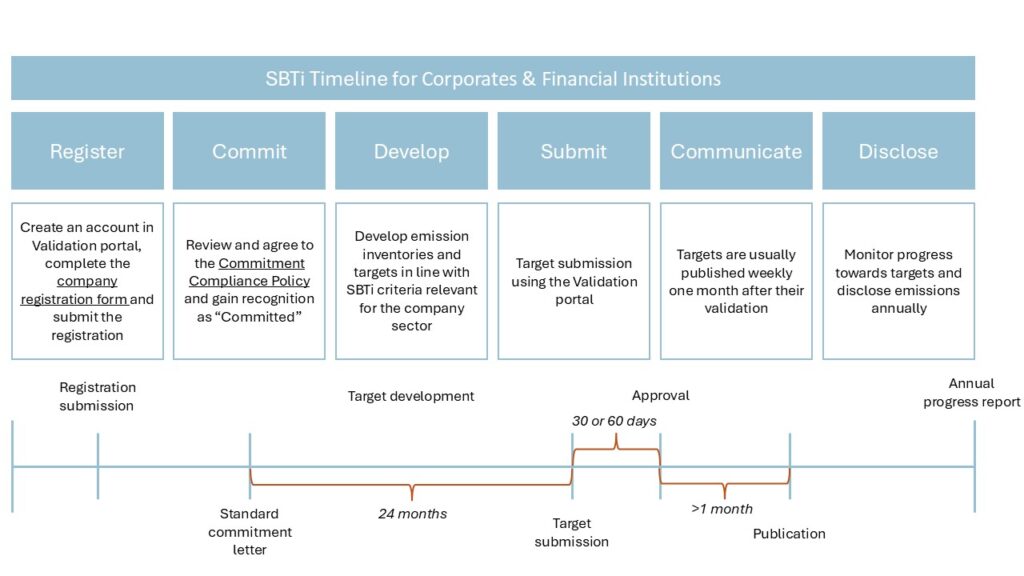
The process typically begins with a commitment phase, where a company formally pledges to set science-based targets. This is done by submitting a commitment letter to the SBTi, which signals intent and starts a defined timeline, usually 24 months, to develop and validate targets.
Setting targets
The next step is target development, where the company calculates its greenhouse gas emissions baseline following the Greenhouse Gas Protocol. This includes:
- Scope 1 and 2 emissions – Direct emissions from owned or controlled operations and indirect emissions from purchased energy.
- Scope 3 emissions – Indirect emissions across the value chain, including upstream suppliers and downstream customers.
Using approved methodologies, the company then defines emissions reduction targets that are consistent with global temperature goals established under the Paris Agreement, typically to 1.5°C or well below 2°C.
Validation and disclosure
This is followed by validation, where the proposed targets are submitted to the SBTi for technical review. The initiative assesses whether the targets meet its criteria, including ambition level, boundary coverage, and methodological soundness. If approved, the targets are officially validated and published, increasing transparency and credibility.
Once validated, the company enters the implementation and disclosure phase. It integrates the targets into its business strategy, operational planning, and capital allocation decisions. Progress is tracked and disclosed annually, often through platforms such as CDP or sustainability reports.
Finally, companies are expected to monitor and update targets over time. As methodologies evolve and climate science advances, targets may need to be revised to remain aligned with the latest standards. This iterative process ensures that corporate climate action remains credible, measurable, and aligned with global climate goals.
 The Environment Consultant