The Carbon Disclosure Project (CDP), has become a central mechanism for environmental transparency, enabling organisations to measure and disclose their environmental impacts in a structured and comparable way. Its development reflects the growing demand for consistent, decision-useful environmental data that supports both corporate accountability and informed investment decisions.
What is CDP
Founded in 2000, CDP is an international non-profit organisation that operates a global disclosure system for companies, cities, states, and regions. It collects self-reported environmental data with a focus on climate change, water security, and deforestation. Over time, CDP has evolved from a climate-focused initiative into a broader environmental reporting platform, widely used by investors, policymakers, and stakeholders to assess environmental performance and risk management practices.
Key focus areas
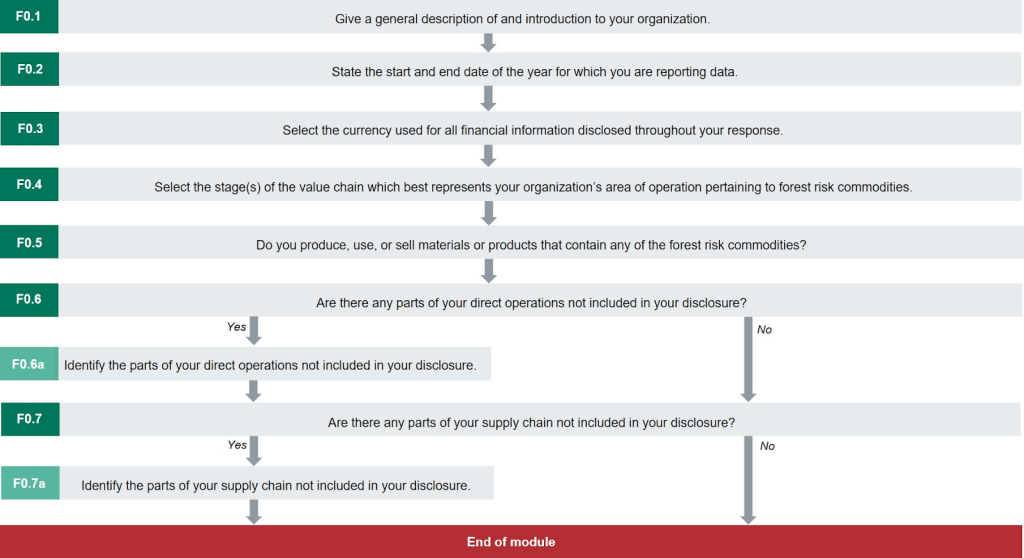
CDP’s disclosure system is built on a standardized questionnaire architecture that captures both quantitative metrics and qualitative information across three environmental themes: climate change, water security, and forests.
In the climate module, organisations report greenhouse gas emissions following the Greenhouse Gas Protocol, including Scope 1, Scope 2, and, where relevant, Scope 3 emissions. The questionnaire also captures data on emissions intensity, reduction targets, internal carbon pricing, and scenario analysis. This enables a detailed evaluation of transition risks, physical risks, and alignment with climate pathways.
The water security module focuses on site-level data, requiring organisations to identify water withdrawals, discharges, and consumption in water-stressed regions. It incorporates risk mapping techniques that assess exposure to scarcity, regulatory changes, and operational disruptions, alongside mitigation strategies and governance controls.
The forests module applies a supply chain lens, requiring disclosure of exposure to deforestation-linked commodities such as palm oil, soy, timber, and cattle products. It includes traceability metrics, supplier engagement practices, and risk assessment methodologies that evaluate deforestation exposure and mitigation actions.
Questionnaire responses are evaluated using a tiered scoring system that ranges from disclosure to awareness, management, and leadership levels. Scoring is based on completeness, data quality, evidence of risk management, and demonstration of best practices such as target-setting and governance integration.
To ensure consistency and comparability, organisations typically align CDP disclosures with established frameworks such as the ISSB Standards and TCFD. Third-party verification is increasingly used to enhance data credibility. The resulting scores and datasets are widely used by stakeholder to assess performance, inform capital allocation decisions, and benchmark organisations against peers.
Corporate challenges and critical insigths
Large multinational firms use CDP to disclose emissions and climate risks. These disclosures have revealed that while most firms report Scope 1 and 2 emissions, significant gaps persist in Scope 3 reporting—particularly in high-impact sectors such as oil and gas, where only a minority of companies fully disclose value-chain emissions.
CDP data has also produced critical insights: for example, analyses show that less than 1% of reporting companies have credible climate transition plans, highlighting a gap between disclosure and effective climate action. Furthermore, inconsistencies in emissions accounting, identified in sectors such as oil and gas, suggest that nearly 40% of reported data may fail basic reliability checks.
 The Environment Consultant