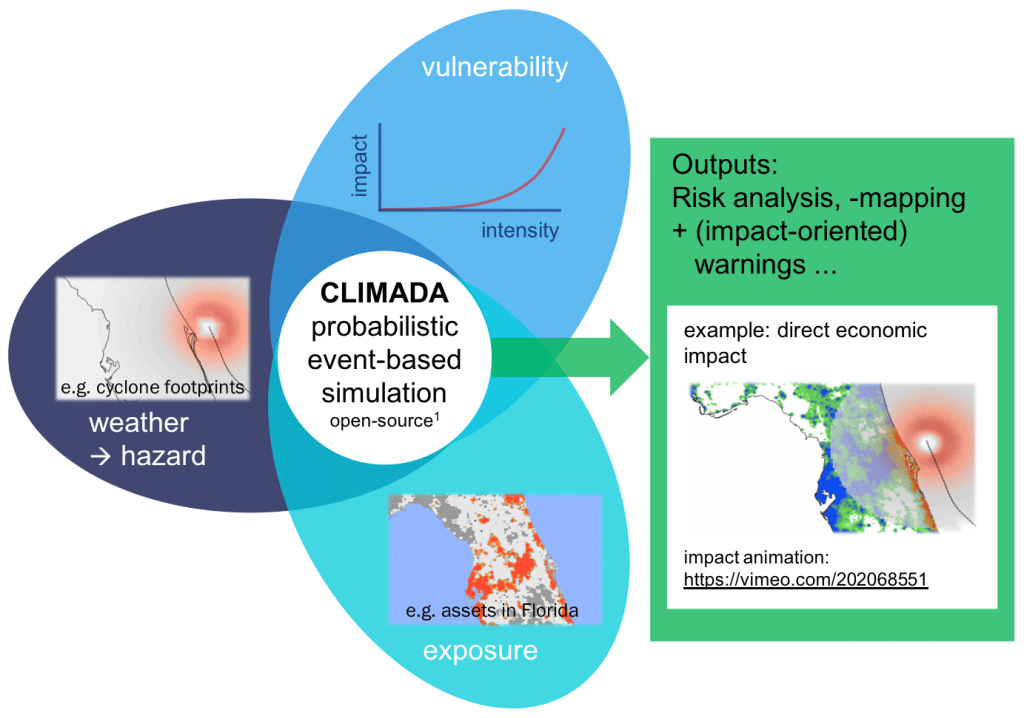
Climate risk assessments are a critical tool for organizations seeking to understand how climate change may impact their operations, assets, and long-term performance. These assessments allow companies to anticipate disruptions, reduce potential financial losses, and strengthen operational resilience.
This article provides an overview of the methodology for conducting climate risk assessments, with a focus on actionable steps for businesses of all sizes.
Overview of Risks
Climate risks arise from both physical climate impacts on assets, operations, and supply chains, and from transition-related changes linked to the global shift toward a low-carbon economy, including evolving policies, markets, and technologies.
Step 1: Identify Relevant Climate Risks
The first step is to determine which climate-related hazards could affect the organization:
Review Historical Climate Data and Trends
- Data to consider: Temperature trends, rainfall patterns, flood frequency, storm occurrences, drought history, sea level rise, heatwave events.
- Sources: National meteorological agencies (e.g., NOAA, Met Office), regional climate centers, IPCC reports, NASA Earth Observatory, World Bank Climate Change Knowledge Portal.
- Example: A coastal logistics hub can analyze 20 years of storm surge and flood data to identify vulnerable periods and locations.
Consider Extreme Events and Gradual Shifts
- Focus: Acute events like hurricanes, floods, wildfires, and heatwaves; chronic changes like rising average temperatures or decreasing water availability; transition risks such as policy shifts, market changes, and low-carbon technology adoption.
- Sources: EM-DAT, Munich Re NatCatSERVICE, national regulatory agencies, industry market reports.
- Example: An agricultural supplier can track long-term drought trends in key sourcing regions and monitor evolving water management regulations.
Engage Key Stakeholders
- Who to involve: Operations, finance, supply chain, risk management, sustainability, corporate strategy.
- Approach: Conduct workshops, interviews, or surveys; review internal reports on prior disruptions, insurance claims, and capital planning.
- Example: The supply chain team identifies suppliers in flood-prone zones, while finance quantifies potential revenue losses.
Step 2: Map Exposure
Mapping exposure is about identifying where company assets, operations, and supply chains are located in relation to climate hazards. Understanding exposure allows organizations to see which parts of their business are physically or operationally at risk, forming the foundation for vulnerability assessment and mitigation planning. Mapping should include both direct operations and upstream/downstream supply chains, as indirect impacts can be significant.
Inventory Assets and Operations
- Compile a comprehensive list of all physical assets (factories, offices, warehouses), operational sites, and critical infrastructure.
- Include suppliers, key distribution hubs, and transportation networks, as disruptions upstream or downstream can affect overall business continuity.
- Example: A beverage company lists all bottling plants, storage warehouses, and major suppliers of water-intensive ingredients.
Geospatial Analysis
- Use GIS mapping to overlay asset locations with hazard data such as flood zones, wildfire areas, drought-prone regions, or coastal storm surge zones.
- This spatial approach helps visualize hotspots where multiple risks converge.
- Example: A logistics company maps warehouse locations against regional flood and storm surge data to identify high-risk hubs.
Consider Supply Chain Exposure
- Identify suppliers, transport routes, and service providers in high-risk areas.
- Evaluate critical dependencies where disruption could cascade through operations.
- Example: A tech company identifies a semiconductor supplier in a drought-prone region, highlighting potential risk to production if water shortages intensify.
Assess Market and Customer Exposure
- Consider the location of key markets or customer bases that could be affected by extreme events, regulations, or market shifts.
- Example: A retailer selling perishable goods identifies that major urban markets are vulnerable to heatwaves or flooding, which could disrupt delivery and sales.
Use Relevant Data Sources
- Hazard Maps: National or regional flood maps, wildfire risk maps, drought vulnerability maps.
- Remote Sensing & Satellite Data: NASA Earth Observatory, ESA Copernicus Program for environmental monitoring.
- Insurance & Risk Reports: Commercial flood or catastrophe risk maps, insurance claim data for past events.
- Internal Data: Historical operational downtime, past disruptions, asset maintenance records.
Visualize and Prioritize Exposure
- Create heat maps or exposure matrices to show which assets or supply chain nodes are most at risk.
- Highlight high-risk areas for further vulnerability assessment and mitigation planning.
- Example: A manufacturing company creates a color-coded map showing factories in high, medium, and low flood risk areas to guide investment in adaptation measures.
Step 3: Assess Vulnerability
Vulnerability measures how sensitive a company’s assets, operations, and supply chains are to identified climate hazards and how well the organization can respond or adapt.
It links exposure to potential impacts, highlighting areas where resilience may be low. Vulnerability is not static, thus regular reviews are necessary as infrastructure, operations, and environmental conditions change.
Physical Sensitivity
- Examine the design, age, and structural integrity of buildings, infrastructure, and equipment.
- Consider whether assets are engineered to withstand extreme events like floods, heatwaves, or storms.
- Example: A coastal warehouse without elevated flooring or reinforced walls is highly vulnerable to storm surges, whereas a similar facility with modern flood mitigation features is less sensitive.
Operational Readiness
- Review contingency and emergency response plans, backup systems, and operational redundancies.
- Assess the ability to maintain critical functions under stress, such as power outages, supply disruptions, or transportation delays.
- Example: A manufacturing plant relying on a single transportation route is more vulnerable than one with alternative logistics options.
Management Practices
- Evaluate maintenance schedules, risk monitoring protocols, and decision-making procedures.
- Strong management practices, such as early-warning systems, regular drills, and risk-based investment, reduce vulnerability.
- Example: A facility with real-time weather monitoring and pre-planned operational adjustments can respond faster to extreme rainfall, reducing potential damage.
Supply Chain Sensitivity
- Identify critical suppliers or partners that may be vulnerable to climate hazards. Disruptions upstream can cascade into operational or financial impacts.
- Example: A food processing company sourcing water-intensive crops from drought-prone regions may face production halts if suppliers lack adaptive measures.
Ecological and Environmental Context
- Consider local environmental conditions such as soil stability, water availability, and biodiversity constraints.
- Natural features can amplify or mitigate hazards—for instance, wetlands can buffer flood risks, while deforested slopes increase landslide vulnerability.
Step 4: Quantify Potential Impacts
After identifying hazards, mapping exposure, and assessing vulnerability, the next step is to estimate the potential consequences of climate risks on the organization.
Quantifying impacts helps prioritize risks, allocate resources efficiently, and inform decision-making. A practical approach is to use scenario-based modeling and engage cross-functional teams from finance, operations, supply chain, and sustainability to ensure that both direct and indirect impacts are realistically captured.
Operational Impacts
- Evaluate how disruptions could affect day-to-day operations, production, and service delivery.
- Consider downtime, supply chain interruptions, and delays in critical processes.
- Example: A manufacturing plant exposed to flooding may experience halted production for several days if machinery is damaged or access roads are blocked.
Financial Implications
- Estimate direct costs such as asset repair, emergency response, insurance claims, and lost revenue.
- Consider indirect costs including penalties, lost contracts, reduced productivity, or increased operational expenses.
- Example: A coastal retail hub calculates potential revenue loss, repair costs, and insurance claims from a once-in-20-year storm event.
Reputational and Strategic Impacts
- Assess the potential effect on brand perception, investor confidence, and stakeholder relationships.
- Include risks related to regulatory non-compliance, ESG reporting, or failure to meet sustainability commitments.
- Example: A company failing to disclose flood risks in key facilities may lose investor trust and face reputational scrutiny in ESG evaluations.
Scenario Analysis
- Model potential impacts under multiple scenarios to capture uncertainty.
- Include best-case, moderate, and worst-case outcomes for hazards like extreme rainfall, prolonged drought, heatwaves, or policy shifts.
- Example: A beverage supplier models water availability under three drought severity scenarios to determine how production volumes, costs, and supply chain reliability could be affected.
Quantitative and Qualitative Metrics
- Quantitative metrics: potential downtime (hours/days), repair/replacement costs, revenue loss, insurance claims, reduction in production capacity.
- Qualitative metrics: operational disruption severity, stakeholder confidence, resilience of suppliers, and adaptability of business processes.
- Example: A logistics company combines quantitative route disruption estimates with qualitative assessments of supplier flexibility and contingency readiness.
Step 5: Prioritize Risks and Actions
Once potential impacts have been quantified, organizations need to prioritize climate risks based on their likelihood, severity, and strategic importance.
A practical approach is to use a risk matrix that combines probability and impact scores while engaging cross-functional teams to ensure that prioritization reflects operational realities, financial exposure, and reputational considerations.
High-priority risks should guide resource allocation, mitigation planning, and decision-making at the management and board level.
Risk Ranking
- Classify risks as high, medium, or low based on combined assessments of likelihood and potential impact.
- Include both physical risks (e.g., floods, heatwaves) and transition risks (e.g., regulatory changes, market shifts).
- Example: A water-intensive manufacturing facility in a drought-prone region may rank high due to the combination of high probability and severe operational consequences.
Mitigation Actions
- Determine actions that can reduce exposure, vulnerability, or potential impacts.
- Examples include infrastructure upgrades, supplier diversification, adoption of low-carbon technologies, or contingency planning.
- Example: The same drought-prone facility may invest in water recycling systems, alternative suppliers, or drought-resistant production processes to lower risk.
Strategic Alignment
- Ensure that prioritized risks and mitigation measures align with corporate strategy, sustainability objectives, and ESG reporting requirements.
- Example: Mitigation actions could support carbon reduction targets or enhance resilience disclosures to investors.
Monitoring and Review
- Continuously track the effectiveness of mitigation actions and revisit risk prioritization as conditions change.
- Example: Annual updates to the risk matrix may reflect new climate data, regulatory changes, or operational expansions that affect exposure.
Step 6: Integrate Findings into Strategy and Governance
After prioritizing risks and identifying mitigation actions, the next step is to embed climate risk considerations into corporate strategy and governance structures. A practical approach is to align risk findings with decision-making processes, investment planning, and ESG reporting, ensuring that climate resilience becomes part of organizational priorities. Cross-functional engagement, including finance, operations, sustainability, and executive leadership, helps translate assessment results into actionable strategies.
Strategic Integration
- Incorporate climate risk insights into corporate planning, capital allocation, and operational strategies.
- Example: A company may revise investment plans for infrastructure in flood-prone areas or prioritize suppliers with strong climate resilience practices.
Governance Structures
- Assign oversight to board committees, risk management teams, or dedicated sustainability units to ensure accountability and follow-up.
- Example: The board reviews an annual climate risk report and approves mitigation budgets for high-priority risks identified in the assessment.
ESG and Stakeholder Reporting
- Use findings to support transparency with investors, regulators, and customers through ESG disclosures and sustainability reporting.
- Example: Risk assessment outcomes inform TCFD-aligned reports, showing how physical and transition risks are managed and mitigated.
Decision Support
- Embed risk data into operational dashboards, scenario models, and strategic tools to guide ongoing decision-making.
- Example: A supply chain dashboard flags suppliers in high-risk regions, prompting contingency actions before disruptions occur.
Step 7: Monitor, Review, and Update
Climate risk assessment is an ongoing process, as hazards, exposure, and vulnerabilities evolve over time. Monitoring and updating ensures that risk management remains effective and aligned with emerging climate trends, regulatory changes, and business developments. A practical approach combines continuous data collection, periodic reassessment, and integration with existing risk management and corporate governance frameworks.
Continuous Monitoring
- Track evolving climate conditions, regulatory updates, and market developments that may influence exposure or vulnerability.
- Example: A company uses satellite data and local weather forecasts to update flood risk probabilities for critical facilities.
Periodic Review
- Conduct formal reviews of the climate risk assessment at regular intervals, such as annually or biannually, to reflect changes in operations, assets, or external conditions.
- Example: A utility company revises its risk matrix after expanding operations into new regions with different climate hazards.
Adjust Mitigation and Strategic Plans
- Update adaptation measures, contingency plans, and investment priorities based on new findings.
- Example: A beverage manufacturer expands water-saving initiatives after updated drought projections indicate increasing severity in supplier regions.
Documentation and Reporting
- Maintain detailed records of assessments, actions, and updates to support transparency and ESG compliance.
- Example: Updated climate risk logs feed into annual sustainability reports and investor disclosures, demonstrating proactive management.
Data Sources
Reliable data are essential for climate risk assessments, and should integrate historical records, observational datasets, modeled projections, and internal business information for accuracy and relevance.
Climate and Environmental Data
Historical climate records, such as temperature, rainfall, storms, droughts, and sea level trends, provide a baseline for assessing risks. Extreme event databases offer information on hurricanes, wildfires, floods, and heatwaves. Environmental context data, such as soil stability, vegetation, water availability, and urban heat islands, helps evaluate vulnerability.
Sources include meteorological agencies, NASA, ESA Copernicus, GIS platforms, and local environmental authorities.
Internal, Supply Chain, and Market Data
Internal data includes asset inventories, operational records, and financial information, essential for quantifying exposure and potential impacts.
Supply chain data, such as supplier locations and transport routes, and market data, like customer concentration and demand sensitivity, help assess indirect risks and operational vulnerabilities.
Regulatory and Policy Information
Transition risks arise from policy changes, carbon pricing, low-carbon regulations, and market shifts. Data from national regulatory bodies such as laws and regulations, international frameworks such as TCFD, SASB, TNFD, as well as industry updates help organizations anticipate compliance and strategic challenges linked to climate change.
Modeling and Scenario Data
Climate projections, regional models, hydrological simulations, and GIS-based exposure mapping allow scenario-based analysis of potential impacts. Modeling supports planning for best-case, moderate, and worst-case scenarios, guiding prioritization and adaptation strategies.
 The Environment Consultant