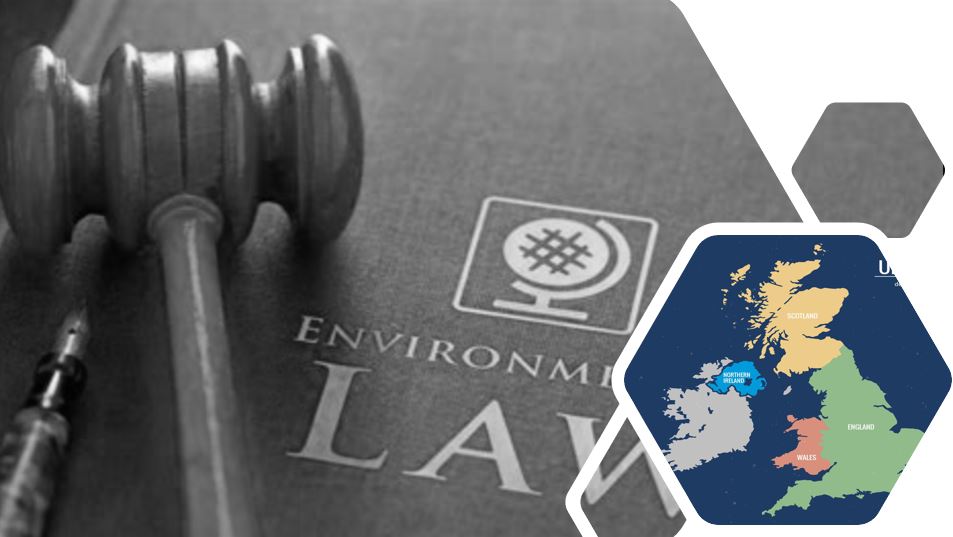
This post presents an overview of the Environmental Regulatory Framework in the United Kingdom (UK). In practice, this framework is an important consideration during the preparation of environmental studies such as Environmental Impact Assessments (EIA), Strategic Environmental Assessments (SEA), Environmental Monitoring Plans, and Compliance Reports.
This overview captures the primary UK regulations and is formatted to reflect the style commonly used in formal environmental documentation. Not all regulations apply to every project; environmental assessments should justify the inclusion of relevant laws based on the specific project context.
Legal Basis and Environmental Authorities
Environmental protection in the UK is grounded in national legislation and influenced by European Union–derived directives, which remain part of domestic law post-Brexit through the European Union (Withdrawal) Act 2018. Key statutes include the Environmental Protection Act 1990, Town and Country Planning Act 1990, and Wildlife and Countryside Act 1981, among others.
Environmental regulation and permitting responsibilities are shared among national agencies, overseeing England, Wales, Scotland, and Northern Ireland – though each nation has its own specific structures:
1. National-Level Authorities
England:
Department for Environment, Food & Rural Affairs (DEFRA): Sets overall national environmental policy, strategic priorities, and legislation.
Environment Agency (EA): Primary regulator for England, responsible for:
- Industrial pollution control and permits
- Water quality and abstraction
- Waste management and contaminated land
- Flood risk management
Natural England: Focuses on biodiversity, species protection, Sites of Special Scientific Interest, and Nature Recovery Networks.
Marine Management Organisation (MMO): Manages marine and coastal areas, licensing activities in territorial waters.
Wales:
Natural Resources Wales (NRW): Combines the roles of environmental regulator, policy advisor, and resource manager for land, water, waste, and biodiversity.
Scotland:
Scottish Environment Protection Agency (SEPA): Scotland’s regulator for pollution control, waste management, water, and industrial emissions.
NatureScot: Oversees biodiversity, protected areas, and species conservation.
Northern Ireland:
Northern Ireland Environment Agency (NIEA): Regulates pollution, waste, water, and biodiversity.
Department of Agriculture, Environment and Rural Affairs (DAERA): Sets overarching environmental policy.
2. Local Authorities
Local authorities are responsible for addressing statutory nuisances under the Environmental Protection Act 1990, including noise, dust, odour, light, and smoke.
They also issue smaller-scale environmental permits for low-risk activities and play a central role in local planning and enforcement, ensuring that biodiversity and other environmental considerations are integrated into development projects.
3. Sectoral or Specialized Regulators
Certain industries or environmental sectors have their own regulatory bodies:
- Health and Safety Executive (HSE): Manages chemical hazards and occupational environmental risks.
- Office for Nuclear Regulation (ONR): Oversees radioactive substances.
- Canal & River Trust: Manages inland waterways and associated environmental responsibilities.
- Port and Harbour Authorities: Oversee environmental compliance within ports and shipping areas.
4. Advisory or Statutory Non-Departmental Bodies
Provide guidance, policy advice, and scientific input:
- Joint Nature Conservation Committee (JNCC): Provides guidance on biodiversity, species protection, and international obligations.
- Royal Society for the Protection of Birds (RSPB) and other NGOs influence policy and conservation initiatives.
National Legislation
The UK’s environmental legislation consists of integrated laws covering multiple environmental aspects, alongside sector-specific regulations targeting air, water, waste, and biodiversity.
Environmental management is guided by both statutory law and regulatory guidance issued by national agencies such as the Environment Agency (EA), Natural England, and the Health and Safety Executive (HSE).
Core Integrated Environmental Laws
The following statutes form an integrated legislative framework to ensure that projects and activities are evaluated holistically, with enforceable responsibilities for environmental stewardship embedded across sectors and phases of development.
Environmental Protection Act 1990 (EPA): The EPA is a cornerstone of UK environmental regulation, providing the legal framework for controlling pollution, managing waste, and addressing contaminated land. It empowers regulators and local authorities to issue permits, enforce operating conditions, and take action against environmental harm, while also assigning responsibility for the remediation of contaminated land.
Through its provisions on statutory nuisances, the Act plays a significant role in regulating local environmental impacts such as noise, odour, dust, and light pollution, making it relevant to projects of all sizes.
Water Resources Act 1991: This Act regulates water abstraction, discharges, and water quality to ensure sustainable management of rivers, lakes, and groundwater. It sets the legal framework for permits relating to water use, pollution prevention, and compliance with water quality standards.
The Act empowers environmental authorities to monitor water bodies, control harmful discharges, and enforce penalties for non-compliance.
Town and Country Planning Act 1990 (TCPA): Environmental considerations are integrated into land-use and development decisions through the TCPA. Planning authorities use this Act to ensure that development proposals are assessed for potential environmental impacts, including impacts on landscape, heritage, and ecological features.
The Act empowers authorities to impose planning conditions and obligations that incorporate mitigation measures identified during the environmental review process.
Climate Change Act 2008: This Act establishes a legally binding framework for the reduction of greenhouse gas emissions in the UK. It sets carbon budgets, limiting the total emissions over five-year periods, and requires the government to develop strategies for achieving net-zero emissions by 2050.
The Act also mandates regular reporting and monitoring through the Committee on Climate Change (CCC), providing independent advice on progress and ensuring accountability. It includes provisions for adaptation, requiring government departments to assess climate risks and implement resilience measures across sectors.
Environment Act 2021: This Act provides a comprehensive statutory framework for environmental protection and sustainable management in England. It introduces legally binding targets for air quality, water resources, biodiversity, and waste reduction, and establishes the Office for Environmental Protection (OEP) to enforce compliance.
The Act mandates biodiversity net gain for new developments, requiring measurable habitat improvements, and strengthens oversight on pollution, resource efficiency, and environmental monitoring. It also provides powers for long-term environmental governance, ensuring that both public authorities and developers integrate sustainability into decision-making processes.
Environmental Permitting (England and Wales) Regulations 2016 (EPR): consolidates multiple permitting regimes under a single legislative framework, replacing and streamlining older UK regulations. Its aim is to control emissions and discharges into air, water, and land from industrial, agricultural, and waste management activities, ensuring compliance with both domestic law and retained EU directives such as the Industrial Emissions Directive.
The regulations are enforced primarily by the Environment Agency (EA in England and Natural Resources Wales (NRW) in Wales. Local authorities enforce certain smaller-scale permits, particularly for activities with limited environmental impact.
Environmental Receptor Legislation
In addition to the core-specific regulation, the UK has regulations focused on specific environmental receptors or sectors. Major categories include:
Air Quality
- Environment Act 1995 (Part IV, Air Quality Standards): establishes local air quality management duties for local authorities and sets limit values for pollutants such as NO₂, PM₂.₅, and ozone.
- Air Quality Standards Regulations 2010: transposes EU air quality standards into UK law.
Water Resources and Quality
- Water Resources Act 1991: regulates abstraction, impoundment, and discharge to watercourses.
- Water Industry Act 1991: governs the provision of water supply and sewerage services.
- Environmental Permitting Regulations 2016: covers permits for discharges to water, abstraction licenses, and water pollution control.
Waste Management
- Environmental Protection Act 1990 (Part II): outlines waste duty of care, licensing, and disposal requirements.
- Waste Management Licensing Regulations 1994 / Environmental Permitting Regulations 2016: regulate the treatment, storage, and disposal of hazardous and non-hazardous waste.
- Packaging Waste Regulations 2007: set recycling and producer responsibility requirements.
Land and Contaminated Sites
- Environmental Protection Act 1990 (Part IIA): addresses contaminated land assessment and remediation responsibilities.
- Town and Country Planning Act 1990 (Planning Policy and Development Control): integrates environmental considerations into planning decisions.
Noise
- Control of Pollution Act 1974: regulates statutory nuisances including noise from construction and industrial activities.
- Environmental Permitting Regulations 2016: include noise limits for certain industrial processes.
Nature Conservation and Biodiversity
The UK has a long-standing and highly developed legal framework for biodiversity and nature protection, reflecting both its international leadership in conservation policy and its dense, historically shaped landscape where development pressures and ecological protection must be carefully balanced.
- At the core of this framework is the Wildlife and Countryside Act 1981, which provides baseline protection for wild plants and animals, controls activities such as killing, capturing, disturbing, or trading protected species, and underpins the designation and protection of Sites of Special Scientific Interest (SSSIs). SSSIs are the foundation of the UK’s nature conservation network and impose legal duties on landowners and public authorities to avoid damaging activities or to secure consent before works proceed.
- Complementing this, the Conservation of Habitats and Species Regulations 2017 (as amended) maintain the UK’s system of site- and species-level protection derived from the former EU Habitats and Birds Directives. These Regulations safeguard Special Areas of Conservation (SACs) and Special Protection Areas (SPAs) and require a Habitats Regulations Assessment (HRA) for plans or projects that may affect these sites. This assessment regime is legally stringent: projects may only proceed if it can be shown that there will be no adverse effect on site integrity, unless tightly defined exceptional tests are met.
- The Natural Environment and Rural Communities Act 2006 (NERC Act) strengthens this approach by placing a statutory biodiversity duty on public authorities, requiring them to have regard to the conservation and enhancement of biodiversity in all decision-making. It also establishes priority species and habitats lists, which guide planning decisions and environmental assessments even outside designated sites.
- The Marine and Coastal Access Act 2009 fundamentally reshaped marine nature conservation in the UK. It introduced a comprehensive system of Marine Protected Areas (MPAs), including Marine Conservation Zones (MCZs), designed to protect nationally important marine habitats, species, and geological features. The Act also established marine planning and marine licensing, requiring activities such as dredging, offshore construction, and cable laying to be assessed for environmental effects. Public authorities must exercise their functions in a way that supports the achievement of conservation objectives for protected marine sites.
Other major acts and regulations include:
- Marine Strategy Regulations 2010 (as amended): These Regulations implement the UK’s commitment to achieving Good Environmental Status (GES) in marine waters. They require monitoring and management of pressures such as pollution, underwater noise, biodiversity loss, and seabed damage, and they inform marine planning, licensing, and project-level assessments.
- Water Environment (Water Framework Directive) Regulations 2017 (as amended): Although derived from EU law, these Regulations remain central to freshwater protection. They require rivers, lakes, groundwater, estuaries, and coastal waters to achieve good ecological and chemical status, directly influencing abstraction licensing, discharge permits, and river restoration projects.
- Flood and Water Management Act 2010: This Act supports nature-based approaches to flood risk management and places duties on authorities to consider environmental outcomes, including wetland protection and sustainable drainage systems (SuDS), which also deliver biodiversity benefits.
- National Parks and Access to the Countryside Act 1949: This foundational law established National Parks and Areas of Outstanding Natural Beauty (AONBs) (now also referred to as National Landscapes). It provides statutory protection for landscapes of high ecological, cultural, and scenic value, requiring decision-makers to give great weight to conservation objectives.
- Countryside and Rights of Way Act 2000 (CRoW Act): The CRoW Act strengthened legal protection for SSSIs, increasing penalties for damage and expanding enforcement powers. It also supports access to open countryside while balancing recreation with conservation needs.
- Protection of Badgers Act 1992: A species-specific statute that makes it an offence to harm badgers or interfere with their setts, commonly relevant to infrastructure and housing projects.
- Hunting Act 2004: While primarily a wildlife management and animal welfare law, it reflects broader UK conservation ethics and restricts certain forms of hunting to protect wildlife.
- Forestry Act 1967 (as amended): This Act regulates tree felling through licensing requirements and supports sustainable forest management and woodland conservation, with strong links to biodiversity and climate policy.
- Ancient Monuments and Archaeological Areas Act 1979: Protects scheduled monuments and archaeological sites, often overlapping with ecologically sensitive landscapes and influencing land-use and development decisions.
Biodiversity-Net Gain
More recently, the Environment Act 2021 marked a significant evolution in UK nature regulation by introducing legally binding biodiversity net gain (BNG) requirements for most developments in England. This Act inserted Schedule 7A in the Town and Country Planning Act 1990, mandating that developers must achieve a minimum 10% net gain in biodiversity, ensuring that development results in habitats of greater quantity or quality than the pre-development baseline.
This requirement embeds measurable ecological enhancement directly into the planning system and is supported by wider provisions establishing long-term environmental targets, species conservation strategies, and habitat restoration measures.
Biodiversity Metric
BNG is implemented through a standardised metric-based system, currently Natural England’s Biodiversity Metric, which quantifies habitats based on type, condition, extent, and strategic significance. Developers must submit a Biodiversity Gain Plan demonstrating how a minimum 10% uplift in biodiversity value will be achieved and maintained for at least 30 years. This plan is reviewed and approved by the local planning authority and becomes a legally binding component of the planning permission.
The regulatory framework establishes a clear mitigation hierarchy. Priority is given to on-site habitat retention and enhancement, followed by off-site delivery where on-site gains are not feasible. As a last resort, developers may purchase statutory biodiversity credits from the Secretary of State. Off-site gains must be registered on a national biodiversity gain register, ensuring transparency, traceability, and long-term accountability.
Enforcement is achieved through planning conditions, planning obligations (Section 106 agreements), or conservation covenants, which secure habitat management, monitoring, and reporting obligations over the 30-year period. Failure to deliver or maintain the agreed biodiversity outcomes can result in enforcement action, including breach of planning control.
As a result, BNG has materially shifted the regulatory landscape by transforming biodiversity considerations from a largely qualitative assessment into a quantified, auditable, and legally binding development requirement.
England’s Biodiversity Net Gain framework has set a global benchmark for integrating nature into development planning. This pioneering approach has influenced international environmental policy, inspiring no-net-loss and net-gain strategies in countries such as Australia, Canada, and New Zealand, as well as informing EU and OECD guidance on sustainable land use.
EU Directives
Even after Brexit, several EU-derived environmental laws remain part of UK law because they were retained in domestic legislation through the European Union (Withdrawal) Act 2018. These regulations and directives cover biodiversity, habitats, air and water quality, and industrial emissions. Key examples (some discussed above) include:
- Habitats and Birds Directives: Transposed into UK law as the Conservation of Habitats and Species Regulations 2017, requiring assessments for potential impacts and licensing provisions for otherwise prohibited activities affecting protected species; and the Wild Birds Directive (2009/147/EC), embedded through the Wildlife and Countryside Act 1981 and subsequent updates, protecting wild birds, their nests, and habitats.
- Water Framework Directive (2000/60/EC): Retained in UK law via the Water Environment (Water Framework Directive) (England and Wales) Regulations 2017, setting objectives for river basin management, water quality, and ecological status of water bodies.
- Industrial Emissions Directive (2010/75/EU): Incorporated through the Environmental Permitting Regulations 2016, regulating emissions from large industrial installations and ensuring best available techniques are applied.
- Ambient Air Quality Directives: These set legally binding air quality limits for pollutants like NO₂, PM₁₀, and PM₂.₅, and continue to underpin UK air quality regulations.
- Environmental Impact Assessment (EIA) and Strategic Environmental Assessment (SEA) Directives: These remain effective through Town and Country Planning (Environmental Impact Assessment) Regulations 2017 and Environmental Assessment of Plans and Programmes Regulations 2004, requiring projects and plans likely to have significant environmental effects to undergo assessment.
- Waste Framework Directive (2008/98/EC): Retained in UK law as part of the Waste (England and Wales) Regulations 2011, establishing waste management hierarchies, recycling targets, and producer responsibility schemes.
- Nature Directives and Other Protections: Various EU regulations on species protection, Natura 2000 sites, and invasive species remain embedded in UK law.
International Agreements, Conventions, and Guidelines
The United Kingdom remains committed to a wide range of international environmental agreements and conventions, many of which predate its EU membership:
- UNFCCC (United Nations Framework Convention on Climate Change): Provides the overarching framework for climate change mitigation and adaptation. The UK aligns national policies with its commitments under this treaty.
- Paris Agreement (2015): Legally binding commitment to limit global warming to well below 2°C above pre-industrial levels. The UK’s Climate Change Act 2008 and subsequent carbon budgets reflect its obligations.
- Kyoto Protocol (1997): Although largely superseded by the Paris Agreement, it set earlier emissions reduction targets influencing UK law.
- Convention on Biological Diversity (CBD): Guides UK conservation strategies, protected area management, and species protection.
- CITES (Convention on International Trade in Endangered Species of Wild Fauna and Flora): Controls trade in threatened species; UK implements strict licensing and enforcement.
- Ramsar Convention (1971): Protects internationally important wetlands. UK designates and manages Ramsar sites in line with its obligations.
- Bern Convention (1979): Conserves European wildlife and natural habitats, particularly endangered species.
- London Convention (1972) & London Protocol (1996): Regulate disposal of wastes at sea to prevent marine pollution.
- UNCLOS (United Nations Convention on the Law of the Sea, 1982): Establishes legal framework for maritime zones, navigation rights, and marine environmental protection.
- OSPAR Convention (1992): For the protection of the North-East Atlantic marine environment.
- Basel Convention (1989): Controls transboundary movements of hazardous wastes and their disposal.
- Rotterdam Convention (1998): Regulates international trade of hazardous chemicals and pesticides.
- Stockholm Convention (2001): Eliminates or restricts persistent organic pollutants (POPs).
- Montreal Protocol (1987) & Vienna Convention: Protect the ozone layer through phasing out ozone-depleting substances.
- Agenda 21 / Rio Declaration (1992): Non-binding principles that influence UK sustainable development strategies.
- UN Sustainable Development Goals (SDGs): Integrated into national environmental planning and reporting frameworks.
International Guidelines
In addition to domestic environmental legislation, the UK frequently aligns with international environmental and social standards for projects with cross-border impacts or private financing.
Frameworks such as the Equator Principles, IFC Performance Standards, and World Bank Environmental and Social Safeguards guide sustainable project development, ensuring that environmental, social, and biodiversity considerations extend beyond legal compliance and support global best practices.
- Equator Principles (EPs): A voluntary risk management framework used by banks and financiers to assess and manage environmental and social risks in major projects. Many UK-based banks adopt EPs to ensure funded projects meet international sustainability and biodiversity standards. They require Environmental and Social Impact Assessments, stakeholder engagement, and mitigation plans – often going beyond UK law.
- IFC Performance Standards: Part of the World Bank Group, these standards set best practice requirements for environmental and social sustainability in projects. They cover areas like biodiversity conservation, pollution prevention, resource efficiency, and labor/occupational health. UK companies working on international projects often follow IFC standards to meet investor requirements or financing conditions.
- World Bank Environmental and Social Safeguards: These include policies on land acquisition, resettlement, natural habitats, indigenous peoples, and pollution prevention. UK developers or contractors involved in projects financed by the WB are required to comply.
Environmental Impact Assessment
The Environmental Impact Assessment (EIA) system in the UK is an integral part of the broader environmental regulatory framework, serving as the primary mechanism for ensuring that environmental considerations are systematically incorporated into development decisions. Development projects are categorized based on their potential effects, helping determine whether a full impact assessment is mandatory, or further assessment is needed:
- Schedule 1 Projects: These are typically large-scale developments with potentially significant environmental impacts, such as power stations, airports, or major highways. Projects listed under Schedule 1 automatically require a full EIA, meaning that developers must submit a comprehensive assessment of environmental impacts alongside their planning application.
- Schedule 2 Projects: These are medium-scale projects whose impacts may vary depending on size, location, or sensitivity of the surrounding environment. For Schedule 2 projects, the need for a full EIA is determined through a screening process, conducted by the local planning authority or relevant regulator. Screening evaluates whether the project is likely to have significant environmental effects and, if so, requires the developer to carry out a full EIA.
1. Legal Integration
The EIA is embedded within planning and permitting legislation. These laws require developers to assess environmental impacts before obtaining consent, ensuring compliance with broader statutory objectives, including biodiversity protection, pollution control, and sustainable land use. As part of these regulations are:
- Town and Country Planning Act 1990 (via the EIA Regulations 2017)
- Planning Act 2008 for nationally significant infrastructure projects
- Marine Works (EIA) Regulations 2007 for marine developments
EIAs formally engage key regulators and create a bridge between national legislation and local planning/enforcement, ensuring coherent application of environmental law. Key regulators are:
- Environment Agency – water, waste, and pollution control
- Natural England – biodiversity and habitat conservation
- Historic England – cultural heritage considerations
- Local Planning Authorities – integrating environmental safeguards into local development
2. Link to Environmental Protection
EIAs act as a decision-support tool for authorities to ensure that statutory obligations are considered in planning approvals. The EIAs also ensure that projects do not compromise statutory environmental objectives, such as those in:
- Environmental Protection Act 1990 (air, water, waste, statutory nuisances)
- Wildlife and Countryside Act 1981 and Conservation of Habitats and Species Regulations 2017 (biodiversity protection)
- Environment Act 2021 (biodiversity net gain, long-term environmental targets)
3. Pre-emptive Environmental Management
The EIA system is designed to anticipate environmental impacts before development occurs, rather than dealing with consequences afterward. Central to this approach is the mitigation hierarchy avoid → reduce → restore → compensate, that ensures legal compliance with the regulatory framework.
Beyond compliance, this proactive management encourages adaptive and iterative environmental planning, allowing developers and regulators to refine mitigation measures as more information becomes available or as environmental conditions change over time.
EIA Process Overview
The EIA process is structured to ensure that potential environmental effects of projects are systematically identified, evaluated and mitigated before development consent is granted.
It integrates public and statutory consultations, supports informed decision-making, and helps embed sustainability and ecological improvements directly into project design:
- Screening: determines if a project requires a full EIA. Schedule 1 projects automatically require one, while Schedule 2 projects are assessed based on size, location, and potential environmental sensitivity.
- Scoping: identifies key environmental issues to assess. The planning authority issues a Scoping Opinion, defining the assessment’s scope, methodology, and main topics.
- Environmental Statement (ES): presents the assessment findings, including project description, alternatives, baseline conditions, impacts, mitigation measures, residual effects, and a non-technical summary for public understanding.
- Consultation and Public Participation: developers consult statutory bodies and the public. Comments are addressed in the ES and planning decisions, ensuring transparency and stakeholder involvement.
- Decision Making: the planning authority reviews the ES, consultation feedback, and policies, then grants, refuses, or approves consent with conditions or mitigation measures.
- Monitoring and Compliance: post-consent, projects are monitored for compliance with environmental conditions. Regulators ensure mitigation measures are implemented and impacts managed.
 The Environment Consultant