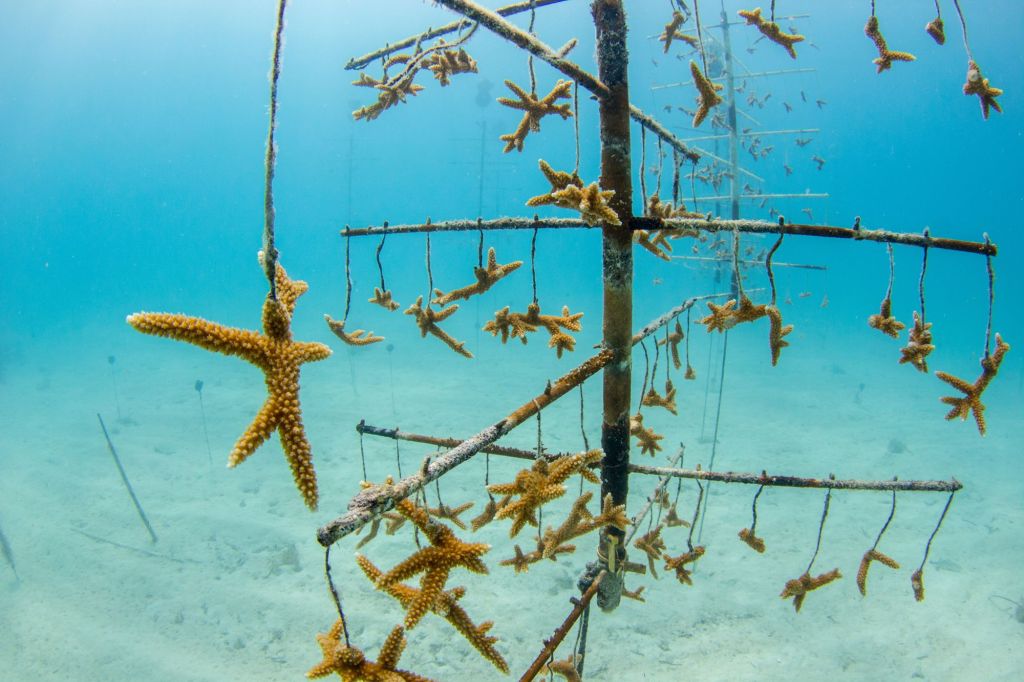
Image credit: Conor Goulding/Mote Marine Laboratory (CC BY 4.0).
Coral reefs are among the most biologically diverse and productive ecosystems on the planet, providing habitat for approximately a quarter of all marine species. They support complex food webs, sustain fisheries, and offer critical ecosystem services such as coastal protection, nutrient cycling, and carbon sequestration.
Despite their ecological importance, coral reefs are highly sensitive to environmental changes, including rising sea temperatures, ocean acidification, overfishing, pollution, and physical destruction. Understanding the structure and function of coral reef ecosystems is essential for designing effective conservation strategies and mitigating biodiversity loss.
Coral Reef Structure and Function
Coral reefs are primarily composed of calcium carbonate structures produced by scleractinian corals, which form symbiotic relationships with photosynthetic dinoflagellates (Symbiodiniaceae). This symbiosis provides corals with energy while sustaining high levels of primary productivity in nutrient-poor marine waters.
Reef complexity, including the presence of branching, massive, and plate-like corals, creates microhabitats for fish, invertebrates, and algae. These structural attributes support ecosystem processes such as herbivory, predation, and nutrient recycling, which are critical for maintaining ecological balance and resilience.
Threats to Coral Reef Health
Global and local stressors contribute to the degradation of coral reef ecosystems. Climate change drives ocean warming and bleaching events, causing widespread mortality of sensitive coral species. Ocean acidification reduces calcification rates, compromising reef structural integrity. Overfishing alters community dynamics, leading to trophic imbalances and proliferation of algal species.
Coastal development, sedimentation, and nutrient pollution further exacerbate reef stress, reducing water quality and impeding coral recruitment. The cumulative impact of these factors threatens both biodiversity and the provision of ecosystem services.
Conservation Approaches
Effective coral reef conservation combines protection, restoration, and management measures. Marine Protected Areas (MPAs) serve as spatial tools to restrict destructive human activities and allow natural recovery processes to occur. Enforcement of sustainable fishing regulations, such as gear restrictions and catch limits, helps maintain balanced trophic structures.
Active restoration approaches, including coral gardening, fragmentation, and transplantation, facilitate the recovery of degraded reef areas. Selection of resilient coral genotypes, often tolerant to thermal stress, has been shown to enhance restoration success. Additionally, substrate stabilization and artificial reef structures can provide settlement surfaces for coral larvae and shelter for reef-associated fauna.
Coral Propagation
Coral propagation is a central technique in reef restoration, aiming to accelerate the recovery of degraded reefs by cultivating and reintroducing corals into damaged areas. The process mimics natural coral reproduction but under controlled conditions that improve survival rates and growth efficiency.
Two broad approaches are generally used: asexual propagation, which involves cloning fragments of existing corals, and sexual propagation, which focuses on cultivating larvae produced from coral spawning events.
Asexual propagation is the most common and practical method for large-scale restoration. It typically involves collecting small fragments, or “nubbins,” from healthy donor colonies and growing them in nurseries, either underwater or on land in aquaculture facilities. These nurseries provide stable conditions with optimized light, temperature, and water flow, allowing fragments to grow without the stresses found on degraded reefs.
Once the fragments reach a suitable size, they are transplanted onto damaged reef areas using various attachment techniques, such as epoxy, cement, or cable ties. Over time, the fragments fuse and grow into mature colonies, contributing to reef structure and habitat complexity.
Sexual propagation, on the other hand, harnesses the natural reproductive cycle of corals. During spawning events, coral gametes (eggs and sperm) are collected and fertilized in controlled environments to produce larvae. These larvae are then settled onto artificial substrates, such as ceramic tiles or limestone discs, and reared until they develop into juvenile corals. Although this method requires more effort and technical expertise, it promotes genetic diversity, which is vital for coral populations to adapt to changing environmental conditions, such as rising sea temperatures and ocean acidification.
Both propagation methods are often used together to balance efficiency and genetic resilience. Asexual propagation provides a faster means of restoring physical structure and ecological function, while sexual propagation ensures long-term adaptability and evolutionary potential. Successful restoration projects also depend on selecting appropriate coral species and restoration sites, managing environmental stressors such as pollution and overfishing, and continuous monitoring to evaluate coral survival and growth.
Monitoring and Adaptive Management
Long-term monitoring of coral reef health is essential to evaluate the effectiveness of conservation interventions. Metrics include coral cover, species richness, recruitment rates, herbivore abundance, and water quality parameters.
Remote sensing, underwater surveys, and photographic transects provide comprehensive data for analysis. Adaptive management allows practitioners to adjust strategies in response to observed changes, ensuring that conservation objectives are met despite environmental variability or emerging threats.
Community and Stakeholder Engagement
Conservation strategies are most effective when integrated with stakeholder participation and community engagement. Local communities, fishers, and tourism operators play a pivotal role in monitoring, compliance, and education initiatives.
Awareness campaigns highlighting the ecological and economic value of coral reefs contribute to sustainable behavior and long-term stewardship. Collaborative governance, combining scientific expertise with local knowledge, has demonstrated improved conservation outcomes in numerous reef systems globally.
 The Environment Consultant