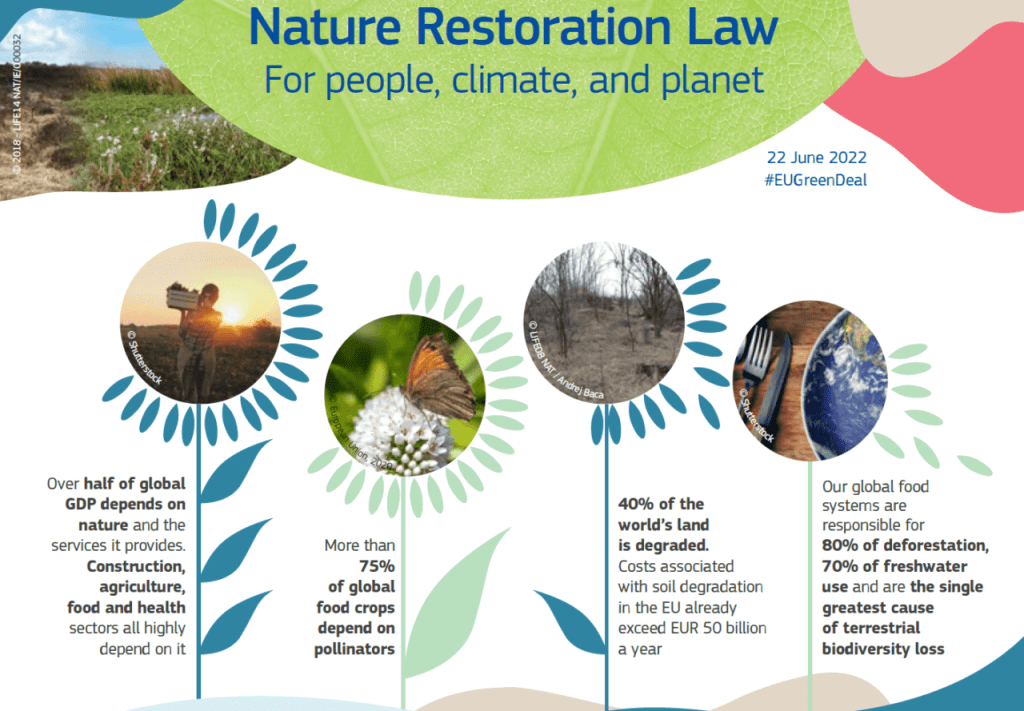
After years of negotiation and mounting ecological urgency, the European Union has adopted the Nature Restoration Law in August 2024, marking a historic step forward in Europe’s environmental policy landscape.
As the first continent-wide legal instrument dedicated specifically to ecosystem restoration, this law moves beyond protection alone and sets binding targets to actively restore degraded ecosystems. It is a key legislative pillar of the EU Biodiversity Strategy and a vital tool in the efforts to address both the biodiversity and climate crises simultaneously.
Moving from Protection to Restoration
While conservation efforts have traditionally focused on protecting what remains intact, the Nature Restoration Law signals a paradigm shift: toward the large-scale recovery of nature that has already been lost or degraded.
The law requires all EU Member States to develop and implement national restoration plans, guided by scientific data and tailored to their ecological contexts. These plans must contribute to overarching EU-wide targets, and progress will be monitored and reported regularly to ensure accountability.
Key restoration targets and obligations
The law outlines a series of binding targets designed to restore ecosystems critical for biodiversity, climate adaptation, and human well-being. These targets include:
- Restoring at least 20% of the EU’s land and sea areas by 2030, with longer-term goals to extend restoration to all ecosystems in need by 2050.
- Improving the condition of specific habitat types, particularly those listed under the EU Habitats Directive, such as wetlands, grasslands, forests, and marine habitats.
- Halting the decline of pollinator populations by 2030 through targeted habitat improvements and reductions in harmful practices.
- Restoring drained peatlands, which are significant carbon sinks, to contribute to both biodiversity and climate mitigation objectives.
- Enhancing urban green spaces, including tree canopy cover, to improve urban biodiversity and climate resilience.
The implementation of these measures is backed by a robust governance framework, with requirements for regular reporting, scientific monitoring, and public participation.
Funding is expected to come from existing EU financial instruments, including the Common Agricultural Policy, LIFE Programme, and national sources.
EU setting a global precedent
The adoption of the Nature Restoration Law sets a global precedent. It demonstrates that legally binding restoration obligations are both feasible and necessary, particularly in high-income regions with the resources to lead by example.
As ecosystems face growing pressures from climate change, land-use change, and pollution, the EU’s move to legally enshrine restoration targets offers a hopeful and practical model. It shows that environmental ambition can and must be supported by strong legal frameworks to translate commitments into measurable impact.
 The Environment Consultant