The Royal Institute of British Architects (RIBA) Plan of Work is a widely adopted framework that outlines the key stages of a building or infrastructure project, from initial conception through to completion and use. While it is a tool predominantly used by architects and project managers, it also provides a structured opportunity for environmental professionals to contribute critical insights that shape more sustainable and legally compliant developments.
This article explores the RIBA Plan of Work from an environmental perspective, highlighting when and how environmental specialists are typically engaged. Special attention is given to the timing of environmental baseline studies, Environmental Impact Assessments (EIA), and advisory input on ecological constraints and opportunities.
Overview of the RIBA Plan of Work
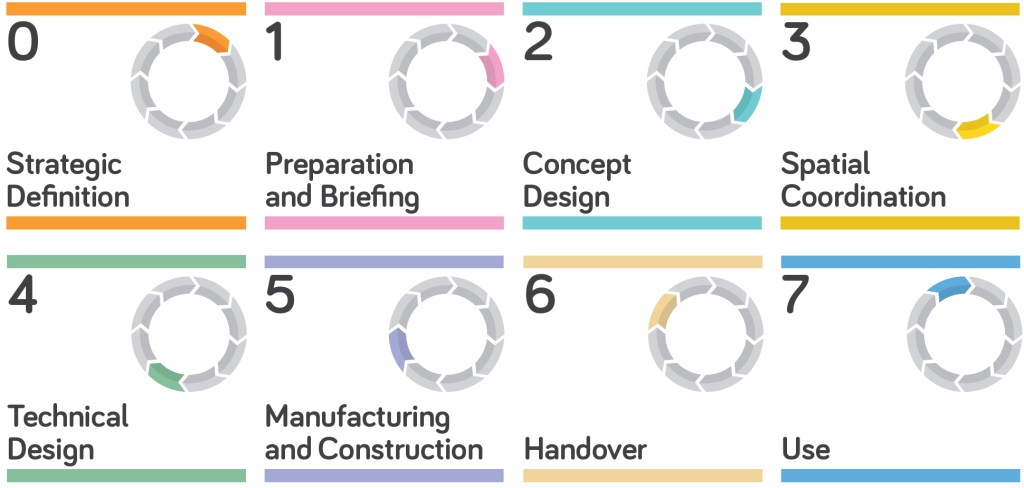
The RIBA Plan of Work is divided into eight stages:
- Stage 0: Strategic Definition
- Stage 1: Preparation and Briefing
- Stage 2: Concept Design
- Stage 3: Spatial Coordination
- Stage 4: Technical Design
- Stage 5: Manufacturing and Construction
- Stage 6: Handover
- Stage 7: Use
Each stage represents a critical phase in project development, with increasing levels of design detail and regulatory engagement. Environmental input is not uniform across all stages; rather, it intensifies at specific junctures where key decisions affecting land use, habitat integrity, pollution risk, and sustainability performance are made.
Stage 0–1: Early Engagement and Environmental Constraints
In Stage 0 (Strategic Definition), the project’s feasibility is assessed, and high-level site risks are considered. If the site includes or is adjacent to sensitive habitats, protected species, or is within a designated conservation area, early input from environmental specialists is crucial.
They can identify potential “no-go” areas and flag risks that could make the site unviable from a regulatory or conservation standpoint.
By Stage 1 (Preparation and Briefing), a more formal engagement of environmental consultants usually occurs. This includes high-level environmental scoping and sometimes preliminary ecological assessments.
If the land includes sensitive ecosystems or water bodies, an environmental specialist may advise, for example, that a road initially proposed through a woodland corridor be rerouted to protect biodiversity corridors.
Similarly, if a golf course or other intensive land-use activity is proposed in an area vulnerable to groundwater contamination, this would be challenged on sustainability and regulatory grounds.
Stage 2–3: Baseline Studies and EIA Initiation
Stage 2 (Concept Design) marks a significant increase in environmental engagement. At this point, environmental baseline studies are typically initiated. These include ecological surveys (e.g., for bats, birds, reptiles), hydrological studies, noise and air quality assessments, and cultural heritage reviews. These surveys often span multiple seasons to ensure robustness.
This stage also marks the potential start of the EIA process, particularly for larger or sensitive developments. The need for an EIA is determined through a screening process, followed by scoping to define the EIA’s scope.
Environmental professionals collaborate closely with architects and planners to integrate avoidance and mitigation strategies into the concept design. For instance, based on habitat data, environmental specialists might recommend altering the masterplan layout to preserve wetland areas or redirect access roads to avoid ecological fragmentation.
In Stage 3 (Spatial Coordination), the project team begins integrating detailed spatial relationships between elements. Here, the findings of the EIA, if undertaken, begin to materially influence the design.
Environmental constraints, such as buffer zones around rivers or protected tree lines, are formalized in the layout. Ecological mitigation strategies, such as green corridors or wildlife underpasses, are embedded in the infrastructure.
Stage 4–5: Technical Compliance and Monitoring Provisions
Stage 4 (Technical Design) focuses on finalizing all specifications and performance requirements, including those related to environmental compliance. At this point, recommendations from the EIA and other environmental studies are translated into specific design actions. Construction Environmental Management Plans (CEMPs), Biodiversity Net Gain (BNG) strategies, and pollution prevention plans are also developed.
By Stage 5 (Manufacturing and Construction), the role of environmental specialists transitions toward oversight and compliance monitoring. They ensure that on-site practices adhere to environmental commitments, especially those tied to planning permissions or protected species licenses.
Stage 6–7: Post-Construction and Adaptive Management
In Stage 6 (Handover), environmental focus shifts to the implementation of post-construction ecological monitoring, particularly where habitat creation or translocation has occurred. Key success indicators, such as flora re-establishment or water quality thresholds, are tracked over time.
Stage 7 (Use) includes ongoing environmental performance assessments where required. This could include green building certifications (e.g., BREEAM, LEED) and long-term biodiversity monitoring.
Wrap up
Environmental professionals play a critical advisory role throughout the RIBA Plan of Work. Their involvement is especially impactful during the early design stages (0–3), when strategic choices about land use and layout are still flexible.
Early environmental input not only prevents costly redesigns but also aligns development with ecological integrity, legal obligations, and sustainability goals.
 The Environment Consultant