The International Union for Conservation of Nature (IUCN) Red List of Threatened Species is a vital tool for environmental consultancy firms conducting ecological assessments. It serves as a comprehensive inventory of the conservation status of species around the world. This resource is used globally to guide decision-making in conservation, land-use planning, and biodiversity management. For environmental consultants, integrating the IUCN Red List into ecological assessments is essential for understanding the potential impacts of projects on biodiversity.
What is the IUCN Red List?
The IUCN Red List is an extensive database that classifies species according to their risk of extinction. Each category represents a different level of risk, from species that are already extinct to those that are abundant and not currently facing significant threats.
- Extinct (EX)
- Extinct in the Wild (EW)
- Critically Endangered (CR)
- Endangered (EN)
- Vulnerable (VU)
- Near Threatened (NT)
- Least Concern (LC)
- Data Deficient (DD)
- Not Evaluated (NE)
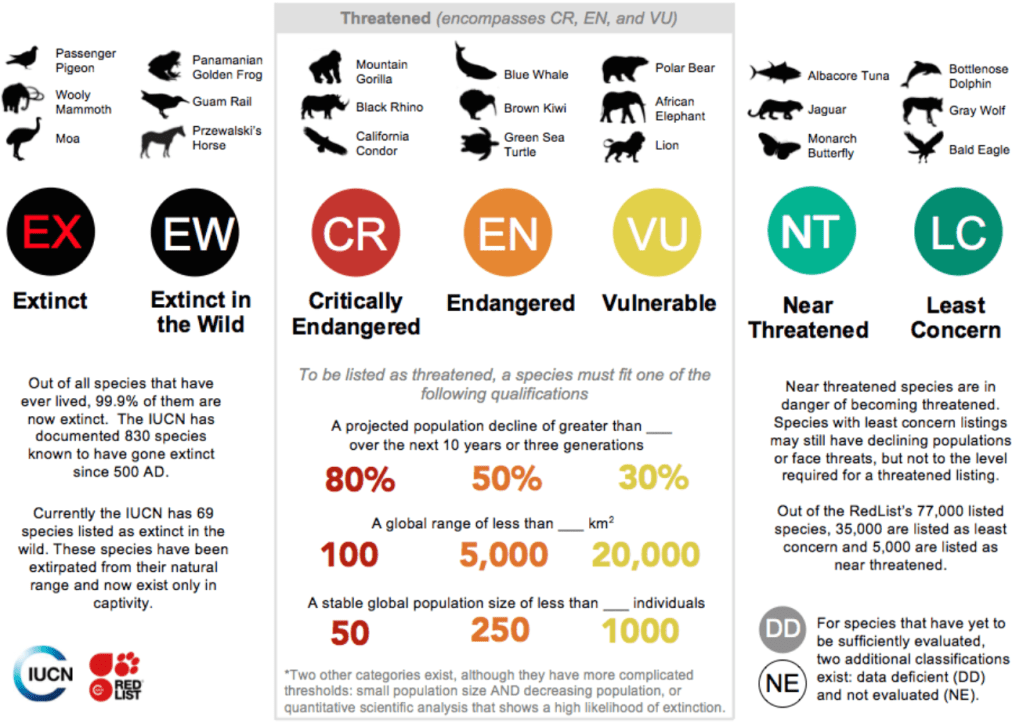
Overview of IUCN Red List categories, based on thinkwildlifefoundation.com.
These categories are based on specific criteria, including population size, rate of decline, geographic range, and the quality of the species’ habitat. The Red List is considered the most authoritative and reliable source for determining the conservation status of species globally.
The IUCN Red List are intended for assessments focusing on the global population of a species. However, there are variations at a regional level, where the global extinction risk classification may lead to inaccurate results. To address this, IUCN developed the Regional Guidelines for applying the criteria at national and regional levels.
Using the IUCN Red List
During ecological surveys – that could be part of Environmental and Social Impact Assessments (ESIA), environment consultants carry out an inventory of species present in the survey area. Ecological assessments incorporate the IUCN Red List by comparing those species with those identified on the Red List to evaluate their risk status. Consultants assess whether any threatened species are present within the project area and determine the potential impact of the project on these species.
Importance of the IUCN Red List in ecological assessments
The IUCN Red List plays a pivotal role in identifying species that may be affected by development projects or other human activities. By referencing the Red List, consultants can determine which species are most vulnerable and need special attention during the planning process.
Additionally, the Red List helps consultants identify the priority species and ecosystems that require urgent protection. It provides scientific data that supports the decision-making process, ensuring that conservation efforts are aligned with national and global standards and priorities.
Some of the threatened species listed within the Red List might have a local protection status. In such cases, the conservation recommendations should align to the national regulations – that could recommend species relocation or habitat compensation, as well as adjustments to the project design to minimize adverse effects. In some cases, more extensive studies such as species-specific surveys may be required.
How the IUCN Red List supports environmental consultancy
- Guiding conservation strategies: When conducting an ecological assessment, understanding the conservation status of species in the area of interest is crucial. The IUCN Red List provides consultants with an up-to-date and globally recognized framework to identify threatened species and their habitats. This information is critical for designing strategies to mitigate any negative effects on these species.
- Risk assessment: Consultants can use the Red List to assess the likelihood that a species will be impacted by a development project. If a project is located in a region home to species classified as “Endangered” or “Critically Endangered,” additional measures must be taken to reduce harm. The list helps in evaluating both direct and indirect risks, including habitat destruction, pollution, and climate change.
- Regulatory compliance: Many environmental regulations require the consideration of threatened species and ecosystems before any development can proceed. By referencing the IUCN Red List, environmental consultants ensure that their assessments meet legal and regulatory requirements. This compliance is vital for securing necessary permits and avoiding legal challenges.
- Biodiversity monitoring: Consultants often recommend ongoing biodiversity monitoring throughout the life of a project. The IUCN Red List offers a valuable reference point for monitoring the health of species populations and assessing whether conservation measures are effective. Tracking changes in species’ conservation statuses can guide adaptive management strategies.
Limitations of the IUCN Red List in ecological assessments
While the IUCN Red List is an indispensable tool, it is important to acknowledge its limitations. The list relies on available data, which may not always be comprehensive or up-to-date. In remote or understudied areas, species may not yet be assessed, or their conservation status may be unknown.
Conclusion
The IUCN Red List is a critical resource for environmental consultancy firms conducting ecological assessments. By providing a scientifically backed classification of species based on their conservation status, it helps consultants assess and mitigate potential risks to biodiversity. While it has some limitations, the Red List remains an essential tool for ensuring that development projects are environmentally responsible and aligned with global conservation goals. Integrating the IUCN Red List into the ecological assessment process enhances the ability to protect threatened species, preserve ecosystems, and promote sustainable development.
 The Environment Consultant