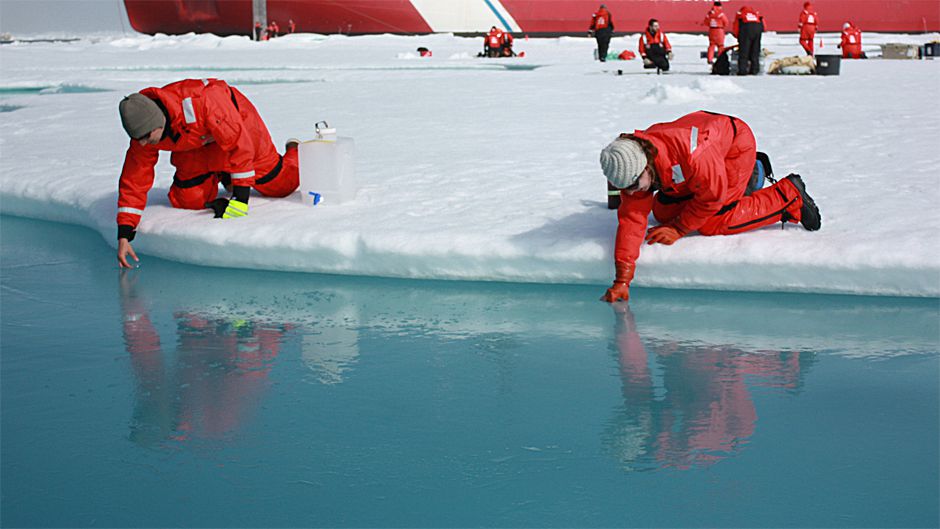
Climate scientist taking surface water samples.
Investigation of the baseline state of physical environmental receptors is required to establish the state of the natural environment before any changes take place as a result of construction, operation and decommissioning of a new development. This applies to both the marine and terrestrial physical environment. Typical receptors to be evaluated with field studies include the following.
Ambient Air Quality
Poor air quality can have significant health and environmental impacts, thus the Environmental and Social Impact Assessment (ESIA) prioritizes its evaluation. Various methods are used to measure and evaluate pollutants in the air, as well as weather conditions. Here’s how the process typically works:
1. Identification of Key Pollutants to Analyze: This step is crucial to understand the existing air quality and determine if the project will lead to any significant changes. During the Scoping phase, consultants identify the types of air pollutants relevant to the specific project, thus they can tailor the methodology for the baseline. Common pollutants include:
- Particulate Matter (PM): PM2.5 and PM10 (fine particles that can be inhaled into the lungs).
- Gaseous Pollutants: Nitrogen dioxide (NO₂), sulphur dioxide (SO₂), carbon monoxide (CO), ozone (O₃), volatile organic compounds (VOCs), and others.
- Greenhouse Gases: Depending on the project, emissions of carbon dioxide (CO₂) and methane (CH₄) may also be assessed.
2. Baseline Air Quality Monitoring: The Scoping phase also proposes the monitoring period, representative sampling locations, and the equipment to be deployed on site.
Depending on the regulations and project’s magnitude, fixed air quality monitoring stations (AQMS) and/or portable equipment is used to capture variations in air quality due to factors like weather conditions, traffic, and industrial activities. The monitoring can last from weeks to months (more than six months if the project must follow international regulations such as the International Finance Corporation Performance Standard 3).
3. Air Quality Modelling: In cases where direct monitoring is not enough or it is not feasible to measure all pollutants in real-time, air quality modelling is used to predict how pollutants will disperse and affect the surrounding environment. This is normally done by vendors (specialized consultants) and not the ESIA consultants.
Noise and Vibration
Ambient noise refers to the general background noise levels in a given area, including both natural and human-made sounds. The ESIA evaluates ambient noise to identify whether the project will cause noise levels that could exceed safe limits (as per standards in regulations) and impact human health and wellbeing. It also evaluates impact on wildlife – especially on species that rely on sound for communication, navigation, or hunting. For example, birds, marine animals, and certain terrestrial species may experience changes in behaviour or displacement due to noise.
1. Baseline Data for Monitoring: During the ESIA baseline studies, sound level meters are used to measure ambient noise at various times of day and in different weather conditions. These measurements are typically taken at multiple locations that are representative of the surrounding environment, including residential, commercial, or sensitive areas. This baseline helps to understand the current noise environment and provides a point of reference for assessing any changes caused by the project. Factors such as the time of day, prevailing weather, and nearby noise sources (e.g., traffic, industrial activities) are considered during data collection.
2. Noise Modelling: Once the baseline data is gathered, predictive modelling may be used to estimate the potential noise levels that could result from the project’s activities, such as construction, operation, or transportation. The modelling takes into account factors such as the nature of the noise sources (e.g., machinery, vehicles), their distance from sensitive receptors (e.g., homes, schools, mosques), and prevailing environmental conditions. The projected noise levels are then compared against local or international noise standards and guidelines, assessing whether they would exceed acceptable thresholds and cause significant impacts on public health, well-being, or wildlife. Based on this evaluation, mitigation measures are proposed, such as noise barriers, scheduling restrictions, or the use of quieter equipment, to minimize the project’s impact on the surrounding noise environment.
Soil Contamination
The ESIA evaluates soil contamination to determine the potential risks that a proposed project may pose to soil quality and the surrounding environment. Soil contamination can result from a variety of project activities, such as construction, waste disposal, industrial processes, or the use of hazardous chemicals. Contaminants such as heavy metals, pesticides, petroleum products, and solvents can negatively impact soil fertility, water quality, and ecosystem health. The ESIA process evaluates the extent of potential contamination, identifies vulnerable or sensitive areas, and ensures that the project will not degrade the soil to levels that would harm human health, agriculture, or natural ecosystems.
To assess soil contamination, the ESIA typically involves baseline soil quality testing, which includes collecting soil samples from the project area and surrounding environments. These samples are analyzed for the presence of pollutants and compared to relevant regulatory standards or guidelines. Many national legislations do not state soil standards, thus various countries use the standards proposed by the Dutch Ministry of Infrastructure and Water Management (Dutch Standards).
1. Baseline Monitoring: The first step is to select representative sampling locations to capture a broad understanding of soil quality across the entire site. Sampling points are chosen in both areas that are likely to be impacted by the project and in nearby control areas to establish baseline conditions. The number of samples, soil depth and locations depend on the size of the area and the potential risk of contamination. Then, soil samples are collected either with hand tools (like a shovel) or using machines when the sampling requires deeper soil.
2. Laboratory Analysis
Once the soil samples are collected, they are carefully transported to a laboratory where they are analyzed for the presence of contaminants such as heavy metals, hydrocarbons, pesticides, or other chemicals. Laboratory tests typically measure the concentration of specific pollutants and compare them to environmental standards or thresholds. Different analytical techniques like spectroscopy, chromatography, or mass spectrometry may be used depending on the pollutants being tested.
Surface Water and Groundwater
Similar to the assessment for soil contamination, groundwater sampling follows a similar systemic approach, with the goal of assessing potential contamination or degradation of water resources due to the proposed project. Sampling helps evaluate the quality of both surface water (such as rivers, lakes, and streams) and groundwater (such as wells and aquifers), identifying any pollutants and ensuring the project does not negatively impact water supplies.
1. Baseline Methodology: Representative sampling locations are selected, in locations chosen in both the area directly impacted by the project (such as near construction sites, wastewater discharge points, or industrial activities) and in surrounding control or reference areas, which are unaffected by the project, to establish baseline conditions. Multiple sampling sites may be chosen along a water body or well network to account for variability in water quality and to capture the potential influence of project activities over time. The number of sampling locations and frequency of sampling are determined based on the scale and nature of the project.
Water is collected from rivers, lakes, or streams using specific equipment such as grab samplers (single sample) or composite samplers (multiple samples combined over time or space). Sampling is typically done at various depths, depending on the stratification of the water body and the specific pollutants being monitored (e.g., near the surface or at the bottom). Groundwater samples are typically collected from monitoring wells that are drilled specifically for sampling purposes. Samples are taken at various depths in the aquifer to assess contamination at different levels. Dedicated pumping equipment is often used to ensure proper purging of the well before sampling to avoid contaminating the sample with stagnant water from the well.
The frequency of sampling may vary based on the potential for contamination, the type of project, and the anticipated impact. It could range from a one-time sampling event to periodic monitoring over weeks, months, or even years.
2. Laboratory Analysis: Once samples are collected, they are transported to a laboratory for analysis. Water quality tests typically look for a range of potential contaminants, including temperature, turbidity, pH, and dissolved oxygen; heavy metals (e.g., mercury, lead), nitrates, phosphates, pesticides, industrial chemicals, and salts; and biological contaminants like bacteria (e.g., E. coli), viruses, and other microorganisms that can affect water safety. The lab tests provide detailed data on the concentration of contaminants, which are then compared to regulatory water quality standards (e.g., WHO guidelines, local regulations) to assess potential risks to human health, ecosystems, and local water users.
Quality Control and Documentation
To ensure the reliability of the results, stringent quality control procedures are followed during the sampling process. This includes proper equipment maintenance, labelling of samples, maintaining chain of custody records, and preventing contamination of samples during collection and transport. Detailed documentation of sampling locations, methods, and conditions is also essential for the ESIA report and future regulatory compliance.
Who Conducts the Baseline Studies?
The baseline assessment of the physical environment is often conducted by a vendor (a service provider). Vendors – also called subconsultants, are specialized companies with technical expertise for a particular subject. These companies are licensed by a local government agency, and follow strict regulatory measurements such as calibration and maintenance of equipment, use of approved equipment by the regulator, registration of each technician to guarantee expertise, and use of trusted laboratories to analyze samples.
The ESIA environment consultants receive the monitoring data and use it to compare it against standards set within environmental regulations for each receptor (air, noise, water, etc.). Based on this evaluation, the ESIA consultants propose mitigation measures, such as noise barriers and use of quieter equipment, or use of special polymers to spread on the soil and reduce dust release during construction activities. These measures minimize the project’s impact on the surrounding environment and communities.
Why the Baseline Assessment is Relevant?
Baseline evaluation of physical environmental receptors in a project site is critical, as assessments provide a reference point for the before-the-project and during-the-project state of the environment. Environmental regulations have set standards that indicate what is consider within healthy or permissive levels, and what levels might pose a risk for the environment and communities. National and international regulations specify that new developments should not contribute beyond the receptor’s levels stated in the regulations.
Using air quality as an example, the International Finance Corporation Performance Standards indicates that new developments should remain within 25% of the airshed capacity in relation to the applicable ambient air quality standards (standards provided by the country, or by international entities). For NO₂, the World Health Organization Guideline sets an annual average limit of 40 µg/m³. In a hypothetical scenario, baseline air quality monitoring shows that the pre-project site has an annual average NO₂ concentration of 45 µg/m³, which is 25% above the permissible standard. Although the project successfully implements measures to mitigate additional emissions, the ambient air levels remain 45 µg/m³ over the subsequent years – due to external emissions. The regulatory authority could impose a penalty during routine audits for exceeding the standard. However, because the project conducted an ESIA, it would be able to demonstrate that it has consistently maintained mitigation measures and that no pollutants originating from the project have been released into the environment. As a result, the penalty would be revoked.
 The Environment Consultant